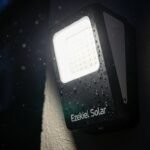
Introduction to Solar-Powered Security Lighting
Solar-powered security lighting systems represent a significant advancement in home safety and community protection. These innovative systems harness solar energy to illuminate residential areas, thereby enhancing visibility and deterring potential intruders. Utilizing solar panels, these lights convert sunlight into electricity, which is stored in batteries for use during nighttime. The simplicity of their design has made them increasingly appealing to homeowners seeking efficient and sustainable lighting solutions.
The growing popularity of solar-powered security lighting can be attributed to numerous factors. Firstly, there is a heightened awareness of environmental issues, prompting homeowners to opt for renewable energy solutions. Solar lights are particularly advantageous as they reduce reliance on traditional grid electricity, thereby reducing energy costs and contributing to a smaller carbon footprint. In addition to their eco-friendly attributes, these systems offer significant functionality, as many models are equipped with motion sensors that activate the lights upon detecting movement, thereby maximizing security.
Advancements in solar technology have also played a crucial role in the increasing effectiveness and accessibility of these lighting systems. Recent innovations, such as high-efficiency solar panels and improved LED technology, have led to longer-lasting performance and brighter illumination than in earlier models. Moreover, modern solar lights are designed for easy installation and require minimal maintenance, making them an attractive choice for homeowners. With these developments, solar-powered security lights are no longer a luxury but a practical alternative for enhancing safety in both residential homes and community spaces.
Benefits of Solar-Powered Security Lighting Systems
Solar-powered security lighting systems present a multitude of benefits that enhance safety and visibility for homes and communities. One of the most significant advantages is energy efficiency. These systems harness solar energy during the day, converting it to electricity that powers the lights at night. According to the U.S. Department of Energy, using solar power can reduce electricity use by 50%-80%, which is particularly beneficial in areas where electricity costs are high. This efficiency not only lowers energy consumption but also decreases reliance on non-renewable energy sources, contributing to a more sustainable future.
Another notable advantage is cost savings. Although the initial investment for solar-powered lighting may be higher than traditional lighting systems, the long-term financial benefits are substantial. Homeowners and communities can save on electricity bills and reduce maintenance costs since solar-powered systems typically have a longer lifespan. Research indicates that communities that adopt solar lighting can save upwards of 30% on energy-related expenditures. Additionally, many local and federal incentives are available to encourage the adoption of renewable energy solutions, further offsetting costs.
Ease of installation is also a significant benefit of solar-powered security lighting. Unlike traditional systems that require extensive wiring and professional installation, solar lights are often straightforward to set up. Most solar lights come with a simple mounting kit, allowing homeowners to install them without specialized tools or skills. This can be particularly advantageous for those in remote areas where connecting to the grid may be challenging or cost-prohibitive.
Lastly, the environmental impact of solar-powered security lighting systems is overwhelmingly positive. By utilizing renewable energy, these systems help reduce the carbon footprint associated with energy production. A study conducted by the National Renewable Energy Laboratory found that solar lighting can effectively reduce greenhouse gas emissions, thereby contributing to cleaner air and a healthier environment.
Improving Home Safety with Solar Lighting
In recent years, solar-powered security lighting systems have emerged as a popular solution for enhancing home safety. These systems harness the sun’s energy to provide illumination, significantly improving visibility during nighttime hours. Enhanced visibility is essential not only for the safety of the residents but also for deterring potential intruders. Solar lighting fixtures typically come equipped with motion sensors that activate lights when movement is detected, which can alert homeowners to any unusual activity around their properties.
The presence of well-placed solar lights around a home serves a dual purpose. First, they illuminate pathways, doorways, and garages, which helps to prevent accidents, such as tripping over obstacles or falling in poorly lit areas. Second, the bright light emitted by these solar lights can act as a deterrent against burglary and vandalism. Potential intruders are less likely to approach a home that is well-lit, reducing the risk of theft and damage.
Numerous homeowners have reported increased peace of mind after installing solar-powered security lighting. For instance, the Johnson family from Texas noted how their feelings of security improved significantly since adding solar lights along their driveway and entry points. They shared how the well-lit perimeter not only helped them navigate their property safely at night but also made them feel more confident when returning home after dark. Similarly, the Rodriguez family in Florida cited an incident where the sudden activation of their solar lights startled an approaching stranger, who quickly retreated once illuminated.
These real-life testimonials underscore the tangible benefits that solar-powered security lighting systems provide in terms of safety and visibility. By investing in solar lighting, homeowners can enhance their properties’ security while simultaneously contributing to environmental sustainability through the use of renewable energy.
Enhancing Visibility for Neighbors and Communities
Solar-powered security lighting systems play a pivotal role in improving visibility across neighborhoods, thereby enhancing the overall safety and security of communities. By illuminating streets, parks, and common areas, these systems create well-lit environments that foster a sense of safety among residents. Well-lit neighborhoods not only deter criminal activity but also encourage residents to engage in outdoor activities, such as evening walks or community gatherings, thereby strengthening community ties.
One of the key advantages of solar lighting is its ability to provide constant illumination without the constraints associated with traditional electrical systems. Solar lights harness energy from the sun, making them an environmentally friendly and cost-effective option for neighborhood safety. This independence from conventional power supply allows them to light up areas that previously may have been neglected due to high electricity costs or logistical challenges of running electrical wires.
Communities that adopt solar-powered lighting solutions often see a transformation in their social dynamics. Increased visibility helps create a welcoming atmosphere where neighbors feel comfortable socializing and participating in communal activities. The presence of light can lead residents to spend more time outdoors, fostering connections amongst individuals and promoting a greater sense of belonging. Additionally, children and the elderly benefit significantly from well-lit areas, as improved visibility reduces the risk of accidents and enhances their independence when moving about the neighborhood.
Furthermore, solar lighting can serve as a visual signal of a community’s commitment to safety and well-being. Residents invested in creating a secure environment are more likely to collaborate on other initiatives, enhancing their neighborhood’s overall livability. This shared responsibility encourages a proactive approach to neighborhood issues, reinforcing social bonds and ensuring that community members look out for one another.
Solar Lighting as a Deterrent to Crime
The implementation of solar-powered security lighting systems has been frequently linked with a reduction in crime rates within residential areas. Numerous studies have revealed a strong correlation between well-lit environments and the deterrence of criminal activity. One notable study conducted by the University of California, Irvine, indicates that improved street lighting can lead to a significant decrease in crime rates, particularly in urban neighborhoods.
Illuminated areas not only enhance visibility but also foster a sense of safety among residents. As individuals become more aware of their surroundings under the glow of solar lighting, the likelihood of engaging in criminal activities diminishes. The presence of light serves as a psychological barrier to potential offenders who often seek dark, secluded areas to commit their crimes.
Moreover, expert opinions underscore the effectiveness of solar lighting as a proactive measure against crime. Dr. Elizabeth Dunn, a leading criminologist, emphasizes that environments illuminated by adequate security lighting experience lower incidents of burglary and vandalism. “Criminals are less likely to act when they know they are under observation,” she asserts. This sentiment is echoed by law enforcement agencies, which advocate for greater community engagement through improved lighting during outreach programs.
It is also worth noting that solar-powered systems are not only environmentally friendly but also economically viable. By reducing energy costs and maintenance associated with traditional lighting, communities can invest more resources into other forms of crime prevention initiatives. As solar lighting increasingly becomes a staple in urban planning, its dual benefits—as a deterrent to crime and a sustainable solution—paint a promising picture for enhanced safety and visibility in neighborhoods.
Sustainability and Environmental Benefits
Solar-powered security lighting systems offer significant advantages in terms of sustainability and environmental impact. By harnessing renewable energy from the sun, these systems reduce reliance on fossil fuels, leading to a marked decrease in carbon emissions. This shift toward renewable energy sources is crucial for combating climate change and contributes to a healthier planet.
One of the most notable environmental benefits of solar-powered lighting is its ability to lower energy consumption. Traditional lighting systems, which often rely on electricity generated from non-renewable sources, contribute significantly to greenhouse gas emissions. In contrast, solar lights operate independently of the grid. They collect solar energy during the day and convert it into electricity for use at night, thus providing illumination without depleting natural resources.
Additionally, solar lighting systems generally require minimal maintenance and possess a longer lifespan compared to conventional lighting solutions. This longevity further diminishes the demand for replacements and reduces waste, contributing to a more sustainable environment. Furthermore, as solar technology advances, the efficiency of solar panels continues to improve, enhancing their ability to generate electricity in various weather conditions.
Moreover, communities that adopt solar-powered projects often experience a ripple effect, encouraging other residents and organizations to participate in sustainable practices. By prioritizing renewable energy sources like solar, these communities work collectively towards reducing their ecological footprint. In doing so, they set an example demonstrating how embracing green technology can lead to environmental preservation.
Ultimately, the integration of solar-powered security lighting systems not only enhances safety and visibility but also embodies a commitment to sustainability, brightening neighborhoods while safeguarding the environment for future generations.
Installation and Maintenance of Solar-Powered Systems
Installing solar-powered security lighting systems for homes and communities involves several crucial steps that ensure functionality and effectiveness. Firstly, it is essential to select an appropriate mounting location that receives ample sunlight throughout the day. Installing fixtures in shaded areas can significantly affect their performance and battery life. Typically, the solar panels should be placed at an angle that maximizes sun exposure, and the lights should be positioned based on specific requirements, such as illuminating walkways, entrances, or parking areas.
Once a suitable location is determined, the installation usually consists of mounting the solar panel and connecting it to the light fixture. Most systems come with detailed instructions, making the process accessible to most homeowners. However, it is advisable to consult a professional if unsure about electrical connections or mounting techniques. Proper installation not only enhances visibility and safety but also ensures the longevity of the system.
Maintenance of solar-powered security lighting systems is relatively straightforward, although it does require periodic attention. Users should regularly clean the solar panels, as dirt and debris can obstruct sunlight and diminish efficiency. Additionally, checking battery life is essential; most systems utilize rechargeable batteries that should last three to five years. It is vital to replace them promptly to maintain optimal performance. Durability is another concern, particularly in adverse weather conditions. Modern solar-powered lights are designed to withstand various weather elements, including rain, snow, and extreme temperatures. This resilience ensures that the system remains functional year-round, providing reliable security lighting regardless of conditions.
In summary, the effective installation and maintenance of solar-powered security lighting systems contribute significantly to their performance and durability, making them valuable assets for enhancing safety within communities.
Cost Analysis: Are Solar Lighting Systems Worth the Investment?
The adoption of solar-powered security lighting systems has become increasingly popular due to their promise of improved efficiency and sustainability. However, a key consideration for homeowners and community planners alike is whether these systems represent a worthwhile investment compared to traditional electric lighting. To evaluate the cost-effectiveness of solar lighting systems, we must analyze the initial investment, long-term savings, and potential increases in property value they offer.
Initially, the cost of purchasing and installing solar lighting systems can be higher than that of conventional electric systems. This is largely due to the need for photovoltaic panels, batteries, and advanced technology to ensure optimal performance. Depending on the brand and specifications, the upfront costs for solar fixtures can range from a few hundred to several thousand dollars. However, it is important to consider this cost in the context of long-term benefits.
One significant advantage of solar-powered systems is the reduction in electricity bills. Once installed, solar lights harness sunlight to operate, which eliminates ongoing electricity costs entirely. Over time, homeowners can save substantial amounts on their utility bills. For instance, in regions with abundant sunlight, the return on investment can be realized within a few years, resulting in a net savings of hundreds to thousands of dollars throughout the lifetime of the lighting system.
Moreover, solar-powered fixtures can enhance the resale value of property. In today’s market, environmentally-friendly features are increasingly appealing to potential buyers. Homes equipped with energy-efficient products like solar lighting often attract higher prices and sell faster compared to similar properties without these installations.
In conclusion, while the initial investment in solar-powered security lighting may be higher, the long-term savings on energy costs, coupled with an increase in property value, make these systems a compelling choice for enhancing safety and visibility in homes and communities.
Conclusion: The Future of Home Security Lighting
In examining the various advantages of solar-powered security lighting systems, it becomes clear that these solutions significantly enhance both the safety and visibility of residential areas, making them vital for home and community protection. The integration of solar technology into security lighting not only promotes energy efficiency but also fosters a sustainable approach to security measures. This innovative technology operates independently of traditional power sources, ensuring continuous illumination even during power outages or in underserved areas.
Furthermore, the adaptability of solar-powered lighting systems allows for their deployment in a diverse range of environments, from urban neighborhoods to rural developments. As homeowners become increasingly aware of the benefits of eco-friendly options, the demand for solar-powered security lighting is expected to grow. Local governments and communities may also invest more in these systems, recognizing their potential to bolster public safety and reduce crime rates through improved visibility.
The future of home security lighting looks promising as advancements in solar technology continue to emerge. Innovations in battery storage, efficiency, and smart technology integration are likely to enhance the functionality of solar-powered systems. Features such as motion detection, remote access, and even integration with home automation systems may become standard. These advancements will further increase accessibility and user-friendliness, making solar security solutions an even more attractive option for homeowners.
In summary, as our society continues to evolve towards renewable energy solutions, the adoption of solar-powered security lighting systems will play an increasingly pivotal role in enhancing the safety and visibility of both individual homes and communities. By embracing these technologies, homeowners can contribute to a safer environment while aligning with sustainable practices for the future.